Making as a Way of Thinking: An Artist’s Journey
For years I thought of being an artist as something you eventually became, as though there was a point at which somebody handed you the title. It took me a long time to realise that I was looking at it backwards.
I don’t think an exhibition, gallery or career makes somebody an artist. The work does. You make art, or you don’t. Everything around it is a different story.
Looking back, making has been present throughout my life, although it has taken very different forms. Drawing, photography, sculpture, fabrication, collage and painting have appeared, disappeared and returned at different moments. My path into art has been less about becoming an artist and more about finding my way back to making my own work.
Every kid makes art but looking at my work now, I find it interesting that scale and constructed surfaces still fascinate me. I like joining things, building surfaces, working across large areas and changing the expected proportions of something.
Abandoned places and my first camera
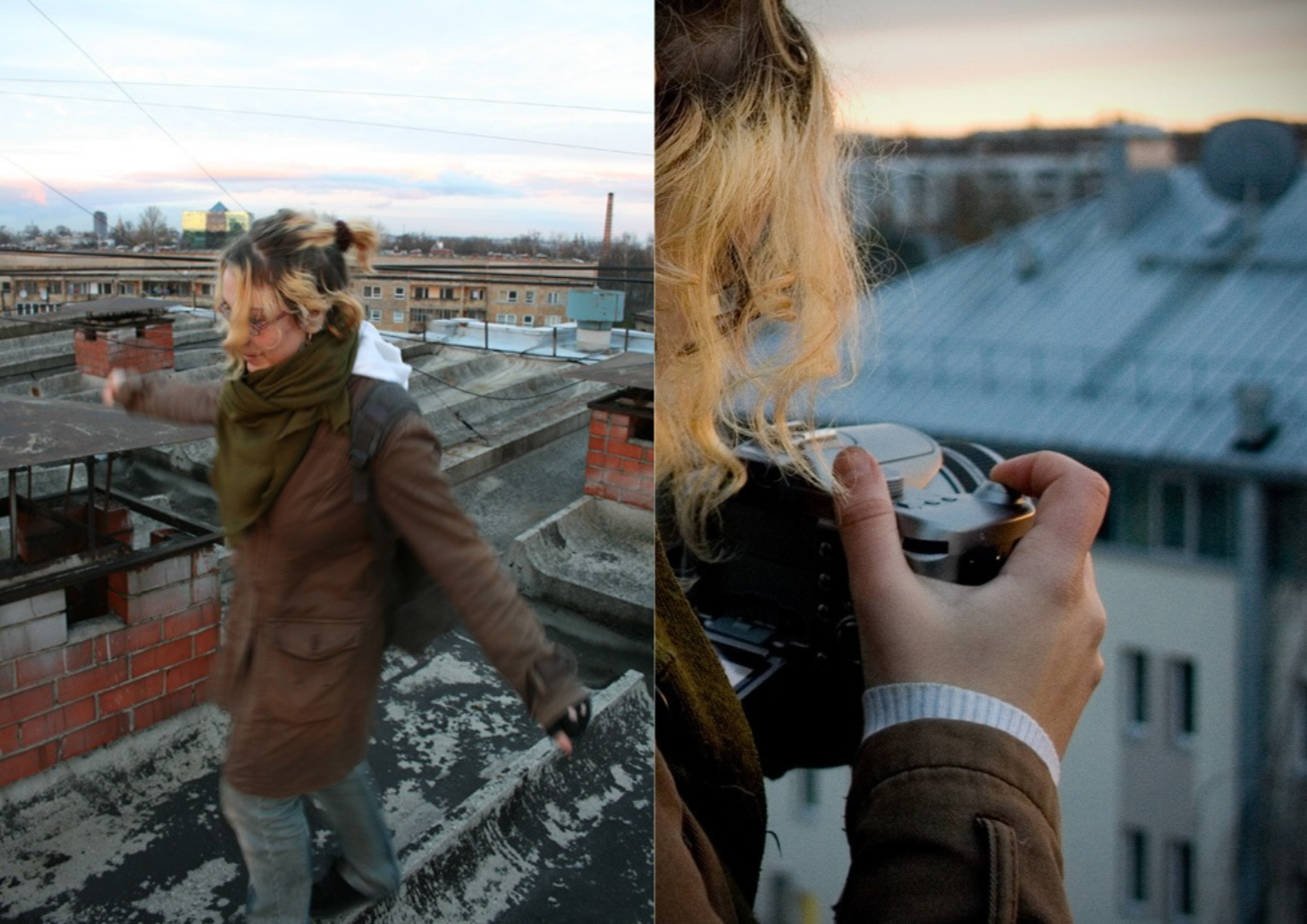
From around the age of fifteen, my friends and I started exploring abandoned places around Riga and nearby towns.
We went into empty factories, train stations, hospitals, hotels and houses. There were abandoned churches too, some still standing quietly in the woods.
I was drawn to derelict buildings, textures, empty rooms and brutalist architecture. We explored everything, from entire buildings to small architectural details.
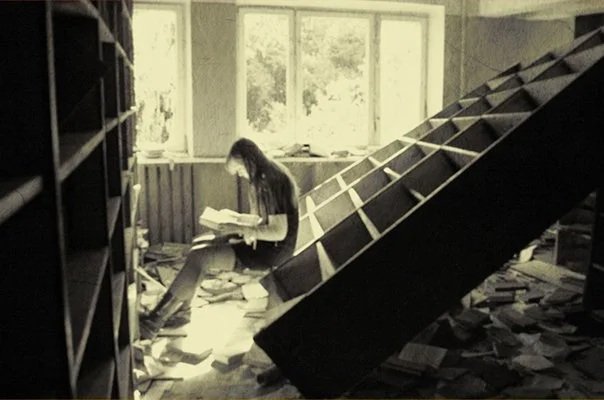
My first digital camera was a Sony, and having it gave me a way to start experimenting with composition and storytelling. I photographed the places we explored, but I was also interested in photographing people.
I particularly loved, and still love, photographing ordinary domestic scenes and daily routines. There is something about observing somebody doing something completely everyday that interests me. Photography made me more aware of how a composition can direct attention and how much can be communicated without explaining everything.
That way of looking still sits somewhere underneath my work now.
Moving from Riga to London
I moved from Riga to London when I was nineteen.
The shift was a huge culture shock. One of the things I remember most strongly was the sheer amount of choice. Different people, different cultures, different visual worlds, and particularly the bookshops.
I loved the atmosphere of them and the possibility of walking in without knowing exactly what I was looking for. Hatchards on Piccadilly became one of the places I remember particularly well.
There seemed to be endless ways of making, thinking and looking contained on those shelves.
Books have remained important to me because I rarely look for one direct answer or influence. I like discovering something unfamiliar, following it somewhere else, and allowing connections to form gradually.
Learning to make at UAL
I studied Technical Arts and Special Effects for Film and Theatre at University of the Arts London, at Wimbledon College of Art.
We made things every day.
I worked with wood, metal and clay, and spent a lot of time in the darkroom. It was an environment where an idea had to become a physical thing, and I loved discovering how many different ways there were to make something.
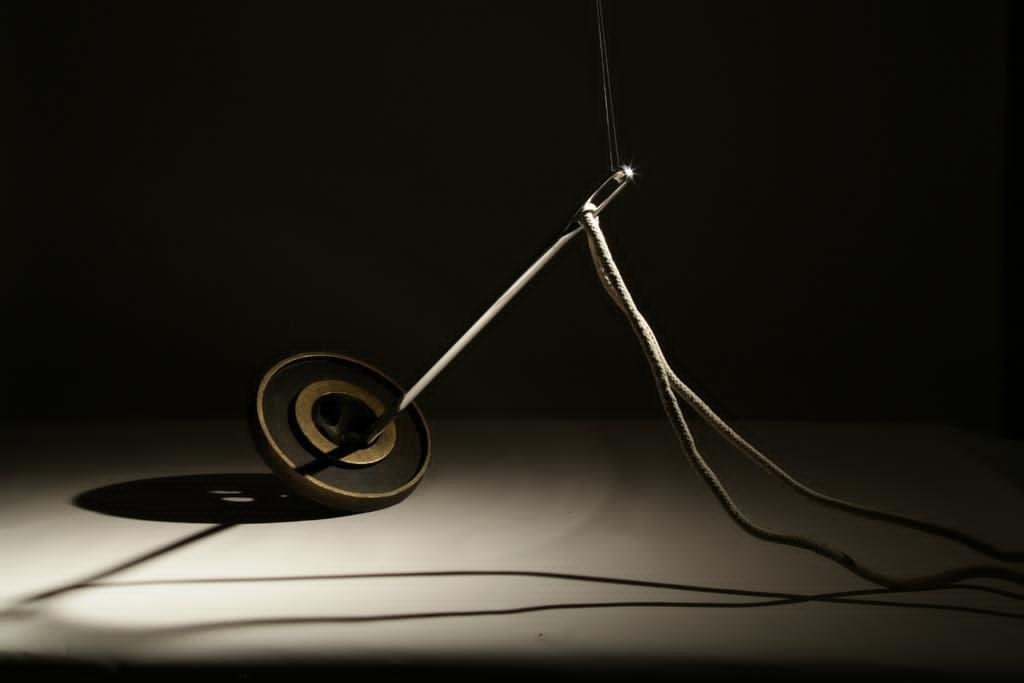
For one project I made a needle and button at around ten times their normal size. I loved working with scale and seeing how an ordinary object changed simply because its proportions had been altered.
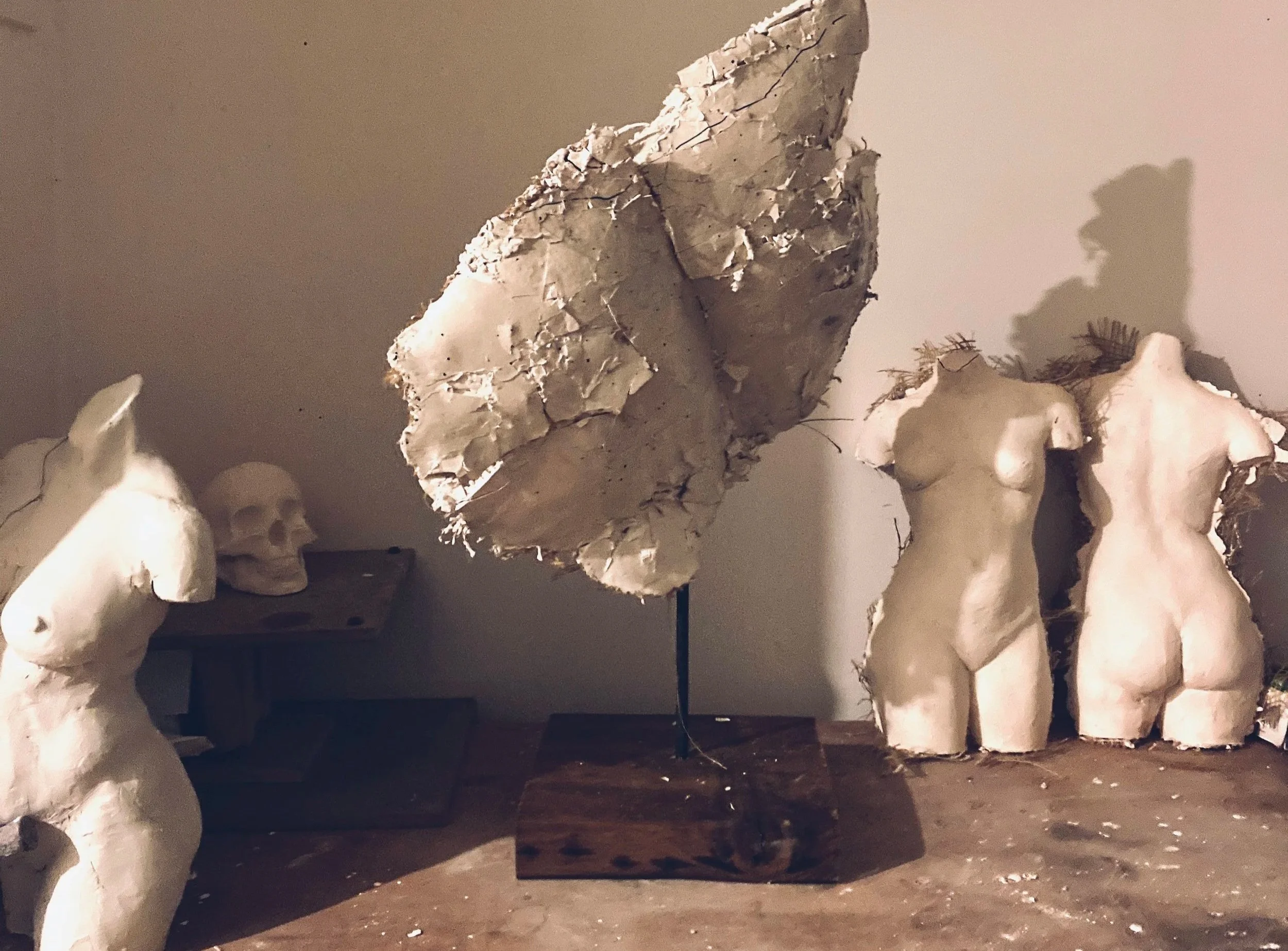
Later I was introduced to clay sculpting, mould-making and casting, and became fascinated with both.
There is something very direct about clay. You are essentially making things out of mud with your hands. Touch is unavoidable.
Moulding and casting interested me differently. I started thinking about it almost as collage in three dimensions. You make components, impressions and separate pieces, then bring them together to form something new.
I still sketch ideas for sculptures and installations now. I know I want to return to three-dimensional work when I have a studio that allows me to do it properly.
For the moment, drawing and painting suit the way I live. They need less space, I move relatively often, and the work is easier to store. But sculpture hasn't disappeared from the way I think.
Making other people's ideas
After graduating, I spent several years working professionally in art fabrication.
It was an intense education in making.
Projects could move from tiny, precise objects to large sculptures for cruise ships. I was constantly learning new processes, materials and ways of solving problems. It was exciting, technically demanding and often very hard work.
But there was an important distinction.
It was never my work.
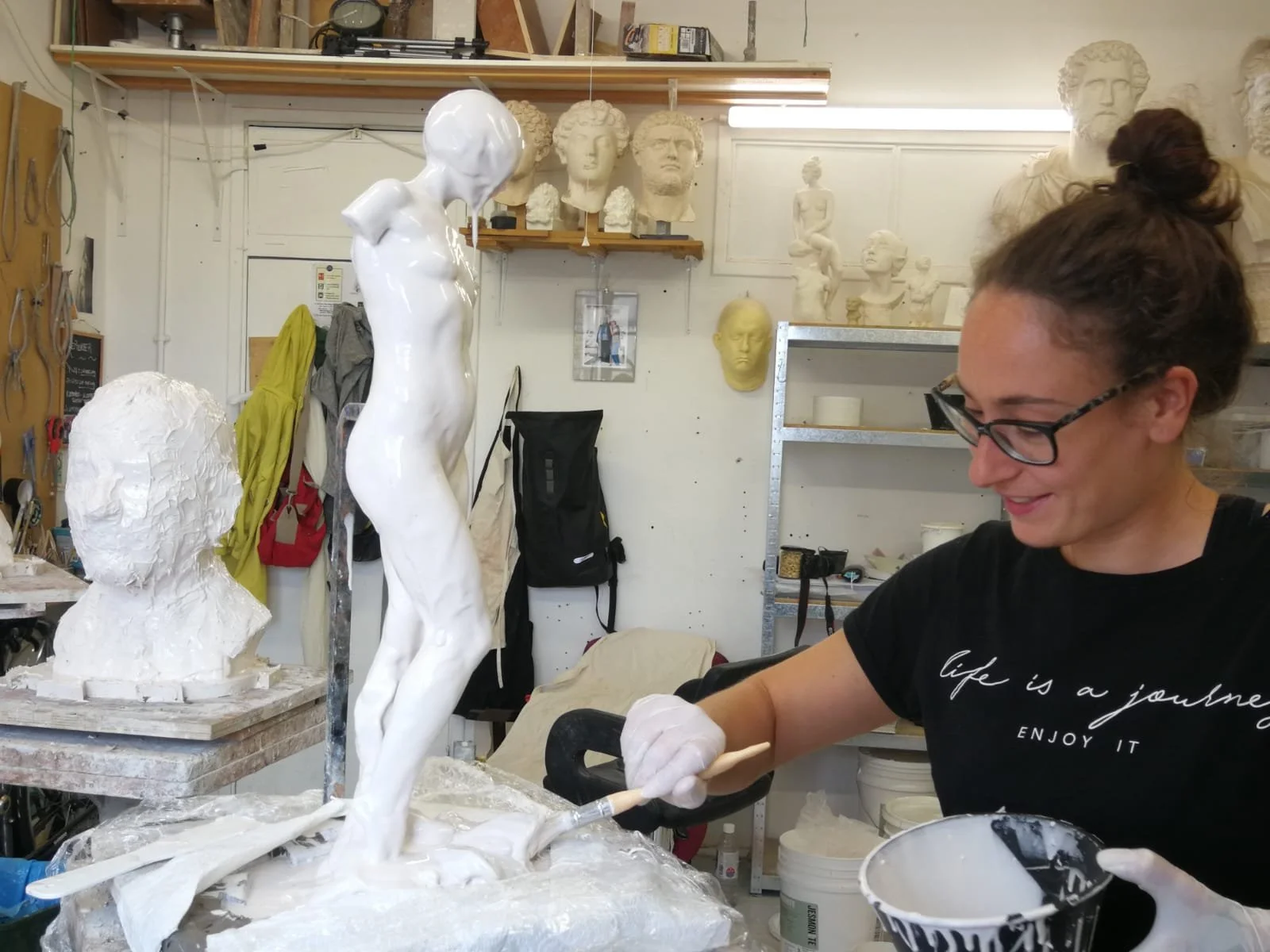
As a fabricator, your job is to understand somebody else's idea and find a way to realise it. There is enormous skill involved in doing that well, and I learned a huge amount during those years, but creatively I was always working towards someone else's destination.
The hours were also long. I was often stressed, tired and working overtime.
There was a strange contradiction in spending every day making things while having almost no time or energy left to make anything of my own.
Making space for my own work
In 2020, I decided to change direction and retrain in massage.
Part of that decision was practical, but part of it was about time. I wanted to build a working life that left space for other things: reading, travelling, drawing in nature, exploring, making art and simply having time to myself.
Once I had established my massage business and finally felt that I had created some breathing room, I started making again.
And interestingly, I began with a large collage.
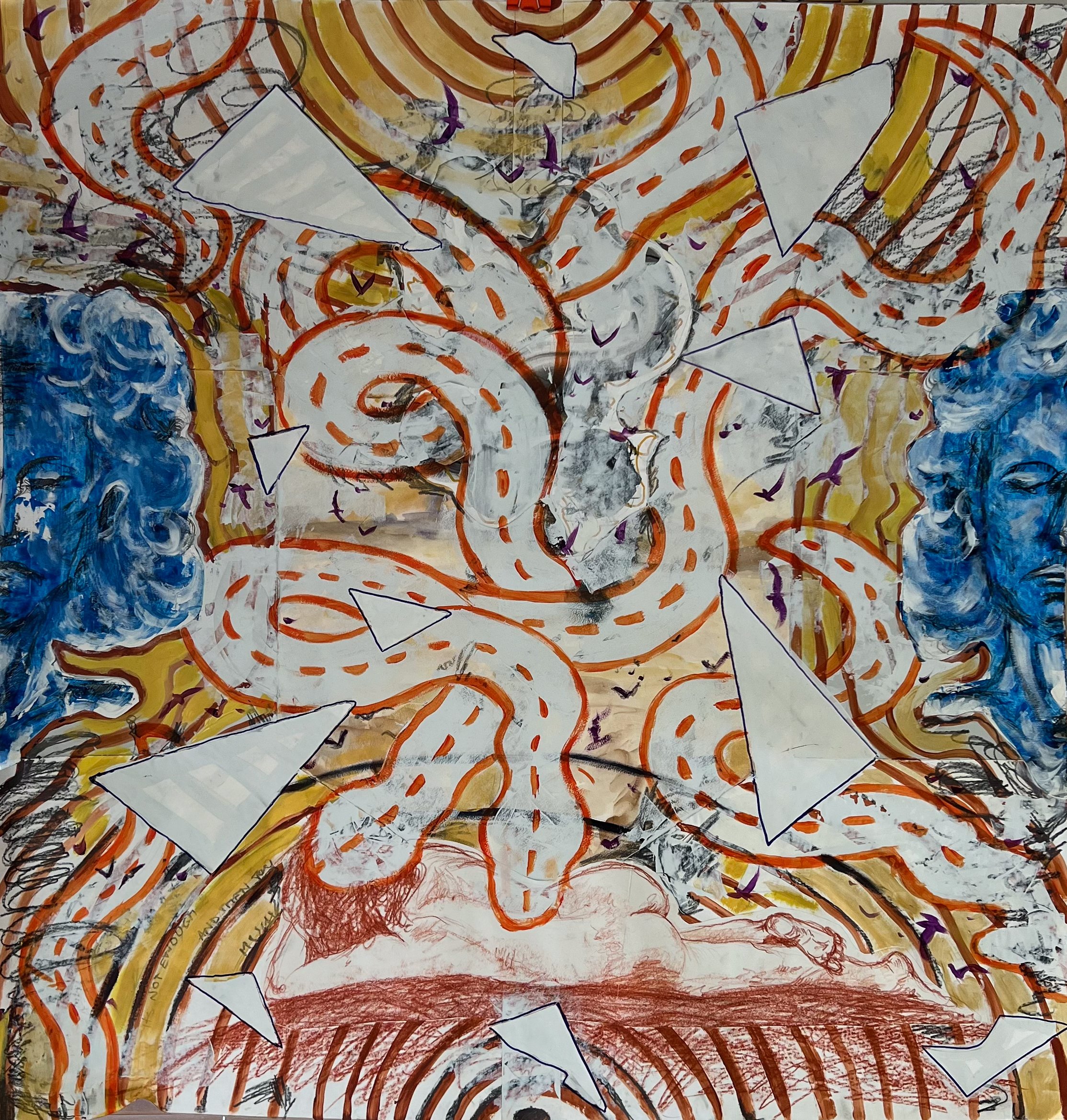
There was something familiar in it. Years earlier I had taped sheets of paper together on my bedroom floor because the surface I wanted didn't exist, so I made it. Now I was building another large surface and beginning again.
I love looking at materials and feeling the possibility of what might happen with them.
I don't necessarily want to know exactly what the finished thing will be. I want to experiment, move things around, make something fail, find something unexpected and surprise myself.
That process of exploration and discovery is one of the things that brought me back to making and continues to keep me there.
Drawing, painting and where the work is going
My practice now moves primarily between drawing, painting and collage.
Observation is often a starting point, but I am increasingly interested in what happens when a drawing moves away from its original subject. I draw from life, then from drawings, memories, shapes, words and fragments. Familiar things can gradually become less recognisable and begin to form their own visual language.
Materials matter to me too. The physical experience of making has never really left the work, even when I am working on a flat surface.
More recently, while developing Microcosm: In Play, I have been looking at artists including Paul Klee, Joaquín Torres-García, Giuseppe Capogrossi and Miriam Schapiro. I am interested in the ways signs, repeated forms, symbols, pattern and material can operate somewhere between something recognisable and something invented.
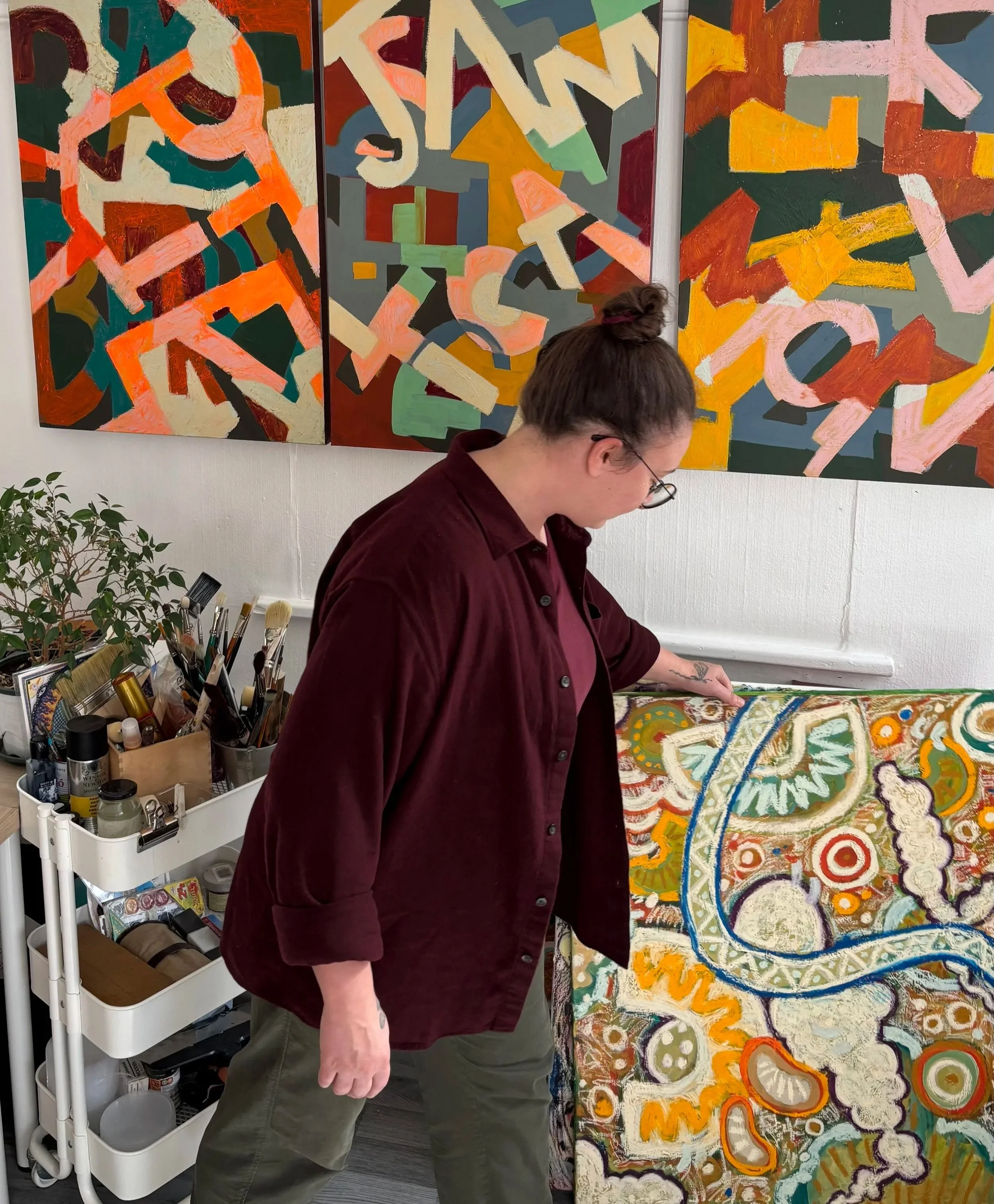
I don't want to reproduce another artist's language. What interests me is seeing how other artists have built their own systems and then asking what my own might become.
That question is still open.
And perhaps that is what I now understand differently about being an artist. I don't need to arrive at a point where the work suddenly certifies me as one.
The work is happening now.
I am making it.